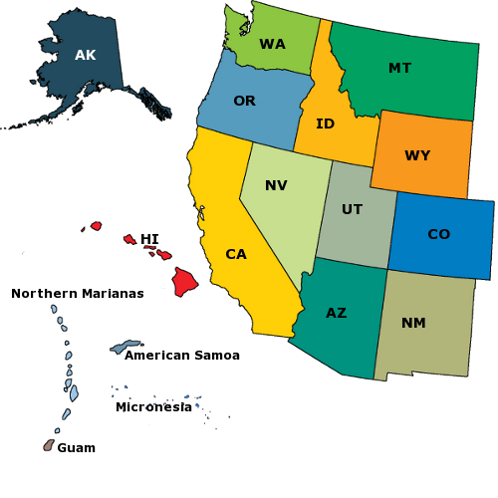
WEDA Business Meeting Notes June 28 – July 1, 2021
Monday, June 28, 2021
2:00-2:55pm Pacific Time – WEDA Business Meeting
Welcome and Introductions – Cody Stone
Roll Call/Sound Check – Pete Pinney, Lindsey Shirley, Cody Stone, Aufai Areta, Mike Gaffney, Kelly Crane, Barbara Petty, Anita Azarenko, Jon Boren, Shannon Horrillo, Blake Naughton, Jeff Goodwin, Wendy Powers, Vicki McCracken, Lyla Houglum.
In-depth Discussion:
The Future of LGU’s – Blake Naughton
The Changing Needs of Extension: Impact
The focus of this discussion is measuring impact—the way we measure faculty performance and their impact through Extension programs.
Blake has a person who can help us synthesize all of these in-depth conversations. This could possibly be the next version or next phase of the Manifesto that was created by WEDA from the 2014 Centennial on the Summit.
- In January we focused on Collaboration through multi-state and external partners. How are we measuring the success of these collaborations?
- February’s conversation focused on Reach—our audiences and equity issues; urban and rural; coverage. How are we perceived, and what does that look like? What are the learning cycles? Various categories of reach. Not sure if we are asking the right questions.
- In March the focus was on Resources—how are resources are changing; more competitive funds. How do we support fund development, or do we?
- May’s conversation was about Innovation—the framework for innovation, and how we catalyze it; how we look at it; are we risk averse; and the challenges of tenure and promotion systems.
Looking at collaborations, how do we measure success?
OR – we ask faculty to classify/categorize their partnerships and tell us about them. We’re moving toward collaborations rather than partnerships.
NV – Looking at a number of collaborations but don’t currently evaluate them. Do evaluate the program outcomes from collaborations. It would be helpful to put something together at the WEDA level.
AK – not officially part of the process yet. Learned that often we don’t have enough resources to collaborate much.
OR – expectation that y9u are evaluate based on your position description; if it’s documented in the position description, they are evaluated against it.
WY – ask faculty to characterize community based collaboration, and to identify their role in the collaboration.
How do we measure reach?
NV – faculty have asked to take this out; they want to focus on program impact rather than the number reached.
HI – there is a new JOE article about evaluating program and impact, public value and impact. “Measuring the Aggregated Public Value of Extension.” December 2020 // Volume 58 // Number
Blake – Missouri had a great system that compared contacts with population data.
Measuring resources:
CA and WA – access to resources varies a lot by discipline.
WA and ID – ask how much money they are bringing in; this is an expectation. If they bring in resources, ask what the outcome/impact of the funding was.
OR and NM – this is a part of the P&T process; often the department defines the metrics.
MT – we evaluate all faculty based on scholarship as defined for Extension.
Measures for innovation:
How do we measure risk takers?
WY – characterize the breadth of the program and the audience.
MT – provide seed grants—innovative program grants are offered.
ID – award innovative program grants annually. Don’t measure and evaluate. Provide individual and team awards.
CA – offer high risk, high reward program funding; very few people have applied.
3:00-5:00pm Pacific Time – Joint General Session
3:00-4:00 – National Updates and Discussion:
Moderator: Barbara Rasco, University of Wyoming
NIFA (National Institute of Food and Agriculture) – Carrie Castille, Director
APLU (Assn. of Public Land Grant Universities) – Doug Steele, Vice President, Food, Agriculture and Natural Resources
Appropriations and Legislative Updates – Cornerstone Government Affairs (Hunt, Jim, Vernie), and Caron Gala, APLU
4:05 – 5:00pm Pacific Time – Western Awards Program and Celebration (attachment):
Moderator: Barbara Petty, University of Idaho
Tuesday, June 29, 2021 – Joint General Session
2:00-5:00pm Pacific Time: Where are we going post-COVID?
Moderator: Glenda Humiston, Vice-President, UC ANR
2:00 Post-COVID Opportunities – Partnerships and Resources
Western Governor’s Association (WGA) – Jim Ogsbury, Executive Director
- Annual Summer Meeting – June 30-July 1; virtual again this year
- Winter meeting – Dec 9-10, Coronado, CA
- Primary initiatives include:
- Working Lands, Working Communities – to examine rural community relationship with working lands; identify barriers, capacity, and expertise to address issues; explore tools and resources; statutory and regulatory issues..
- Western Prosperity Roundtable focused on economic development issues in the West; capacity building; using data and sharing data; workforce challenges.
- WGA Foundation Leadership Institute: for young adults ages 21-25; will be connected to the 2022 summer meeting in Coeur d’ Alene, ID.
Council of State Governments – West (CSG-West) – Edgar Ruiz, Director, CSG-West, and Jackie Tinetti, Policy Committees & Programs Coordinator
- Areas covered include ag and water, education, energy and environment, health, public safety, workforce development and broadband.
- Western Legislative Academy is in December in Colorado Springs
- WESTRAIN – September 28 – Oct 1 in Colorado Springs
- River Governance Committee will meet in Lewistown, ID in August
- Colorado River Basin group will meet for the first session September 28
Western Interstate Region-National Assn. of Counties (WIR-NACo) – Jonathan Shuffield, Associate Legislative Director for Public Lands, and Liaison to the Western Interstate Region
- Focused on wildfire in the wildland urban interface; wildlife conservation and endangered species, partnership with federal agencies including NEPA, BLM, Forest Service, 30X30 initiative conservation programs, and rural infrastructure and economic development including resource dependent communities, broadband and critical services, public health and lack of access in rural communities.
- Tourism issues
- Relationship with federal agencies
- Initiative alignment
- Nexus between research and policy by developing relationships for 2-way street between elected officials and universities; how is information shared with legislature and staff; need to distill research to understandably translate to common person’s language; best practices.
- Legislative Exchange Program
- Anticipate more virtual connections.
3:30 Breakouts by association, led by Association’s Chair:
What are the regional based opportunities to partner and share resources?
WEDA Discussion:
Sharing educational resources between states:
- Need to have an agreement on how to share; examples: beginning small farm research with WA, ID, and OR; the WEDA evaluation group; WEDA farm stress project—each state department of agriculture is getting $1/2M. Need to talk with your state department director about this. In some cases they have essentially turned this money over to Extension.
- Multi-state positions are better when no money changes hands, but rather expertise is shared from one state to the other for something else in return. Difficult to have two bosses.
- Barriers to sharing include: how to give credit to teams in the P&T process which focused on the individual; need to define scholarship regionally; some institutions have a lack of critical mass in areas like community development and nutrition education and would welcome a state partner in these areas.
Adapting new remote education opportunities:
- ID is requiring on-site work, not remote; WA doesn’t have office space in some counties so may have more remote work in the future; CA allowing telework agreements—these will evolve over time; NV is hiring an on-line specialist
- Remote workforce development may be a strength for Extension.
- Need for home health care is increasing.
Resuming post-COVID:
Plans for returning to the workplace include:
- NV – must be in the office 3 days/week
- HI – August 1 expected to return to office, pending union approval
- WY – will be transitioning this summer through the end of August; have a new flexible work policy that is very flexible, although there is a disparity between campus based and county based faculty.
- CA – July 1 returning to work, but will look different in different locations; allowing 40% maximum for remote work. The vaccination rate is not what we want it to be; this is problematic, but it is what it is.
- WA – July 12 return to office but telework will be more flexible.
- ID – professional scheduling; also in WY.
Generating resources creatively:
- More agency contracts
- Using sabbaticals
- How do we package Extension jobs – could be more regional and short term (may want to spend more time talking about this at a future meeting.
Meeting needs of communities:
- Increased minority communities
- COVID led to new audiences and new programs – challenge is that the traditional audiences what things to go back to the way they were and new audiences want to continue. This puts a strain on the Extension delivery systems.
- See EDA.gov/CORONAVIRUS/
Wednesday, June 30, 2021 – Joint General Session
2:00-5:00pm Pacific Time: How will we address access, equity and inclusion with focus on native peoples of our region?
Introduction – Steve Gavaazi, Professor, Human Development & Family Science, The Ohio State University
Keynote Presentation: Overview of Wokini Initiative: How’s it working and how it’s changed Land Grant Tribal Nations – Barry Dunn, President, South Dakota State University
What’s happening, progress made, and how we can effectively partner.
Moderated by: Steve Gavaazi, Professor, Human Development & Family Science, The Ohio State University
- Tracy Dougher, Associate Dean for Academic Programs, College of Agriculture Montana State University
- Ania Wieczorek, Associate Dean for Academic and Student Affairs (Interim), College of Tropical Agriculture and Human Resources, University of Hawaii
- Claus Tittiger, Associate Dean of Academic Affairs, College of Agriculture, Biotechnology & Natural Resources, University of Nevada, Reno
What’s happening, progress made, and how can we effectively partner?
Moderated by John Phillips, Executive Director, FALCON
Virgil Dupuis, Extension Director, Salish Kootenai College
Staci Emm, Professor/Extension Educator, FRTEP, Cooperative Extension, University of Nevada
Alexandra Carlisle, Extension Educator, FRTEP, Navajo Nation, University of Arizona
Group discussion moderated by Steve Gavazzi and John Phillips
Thursday, July 1, 2021 – WEDA Business Meeting
2:00-5:00pm Pacific Time
Welcome and Introductions – Cody Stone called the meeting to order at 2:06 PT.
Roll Call/Sound Check – Cody Stone, Wendy Power, Mike Gaffney, Lindsey Shirley, Shannon Horrillo, Pete Pinney, Jon Boren, Aufai Areta, Vick McCracken, Blake Naughton, Pete Barcinas, Anita Azarenko, Kelly Crane, Jeff Goodwin, Barbara Petty, and Lyla Houglum.
Guests: Michelle Rodgers and Chris Geith
EXCITE Project – Michelle Rogers, Chris Geith
To discuss the system resources developed as part of EXCITE, lessons learned, and feedback from Directors on the same. (20 min)
Michelle gave an overview of the EXCITE project which is funded with a $9.9 M interagency agreement between CDC and NIFA with Extension Foundation to address health disparities among rural and other underserved communities. The focus is on immunization education. 10% of the funding goes to NIFA; 95.5% of the funding goes out to the institutions.
From the West, 13 states applied and received funding for Activity 1—Vaccinate with Confidence. For Activity 2 which was a competitive project with award being ~$200,000, four states in the west received this funding. The focus of the various funded projects include: 8 for farm workers; 4 for rural areas; 4 for African Americans; 3 for Latino; 5 for low income.
Michelle and Chris are visiting with us as they are wanting to take stock throughout the project to identify system innovations and learnings.
Chris explained the role of Extension foundation as a “solutions team.” The Extension Foundation serves as Principal Investigator; provides grants administration; fiscal, operational, and technological services; system-wide communication; innovation processes; wrap-around services for projects; data collection and dashboards; and partnership development. They have developed several new tools including a new reporting tool which feeds the national repository and can be updated at any time. In a timely manner, they were able to streamline the processes of RFA, applications, release of Activity 1 funding, subawards for those, activity review with a panel on which Wendy served. For more information and to review the reports check out the website. https://pages.extension.org/excite
Michelle reported on lessons learned from the aspect of a system, highlighting the benefits of working with Extension Foundation. This project has increased our national presence as they have been at the White House and CDC has brought other partners to the table. It has provided the greatest opportunity to work across disciplines and across states with collaborations between 1862s, 1890s, and 1994s. Have learned that working with the 1994 is not the same as the 1890, or the 1862s. There was enough flexibility institutions could customize their approach so it does not look like a cookie cutter. This project has been cross disciplinary including ag and 4-H, and we are coordinating with the medical community. The requirement of directors signing off, has raised the perceived value.
Jon thanked Michelle for her leadership and Chris for the new synergies that we will be able to use in other ways—creating a new model for funding and doing programming.
Aufa’I thanked them for the special guidance for the American Samoa team.
ACTION: Michelle requested feedback on the following questions for us to respond to:
- What has worked well? What has not worked well?
- How does this experience inform our ECOP efforts around mobilization of other funding sources?
- What are your concerns going forward about this project?
- How can we make this project better for your institution?
- What communications about this project are needed or desired by you as Director?
WEDA Business Meeting
May 26 Meeting Minutes – Cody requested approval of the meeting minutes. Jon moved the minutes be accepted as presented; Aufai seconded the motion. The motion passed, unanimously.
Old Business:
WEDA ED Update – Cody Stone
Doreen will officially begin on August 1. She will work with Lyla beginning the middle of July to accommodate some leave time she will be taking in September. The new contract is working its way through the WSU system.
WEDA Work Plan Discussion – Executive Committee
After much discussion it was determined to continue the transition date for officers and committee assignments to coincide with the NEDA meeting each fall.
The recommended work plan, contracting, and budget timeline was presented (attached). Wendy moved the timeline be approved; Vicki seconded the motion. The motion passed, unanimously.
Two WEDA work plans were attached to the meeting invitation—one for FY21 (attached); and one for the calendar year 2021 (attached). It was decided that the WEDA Work plan will be on the calendar year based on the new timeline. The national work identified in the calendar year plan was written as a guide for Doreen as she begins to identify her national responsibilities. Both work plans will be available on the WEDA website as there will be a 6 month overlap between the two plans.
Also attached to the meeting invitation were samples for the various WEDA committees to use to develop their annual work plans. This will help WEDA and especially new Directors understand the purpose and work of various WEDA committees. There was general agreement that WPOLC, WELD, WRAM and other initiative and regional work groups would develop an annual work plan using the attached templates beginning with the 2022 calendar year, so they will have this summer and fall to develop their work plans which will be presented to WEDA for review and approval in December.
ACTION ITEMS:
- WEDA will work with Doreen to develop the WEDA Work plan and an ED work plan for calendar year 2022.
- The WEDA committee liaisons will work with their committees to develop a work plan for calendar year 2022, to be presented to WEDA for review and approval by December.
- WPOLC will work with the various committees, networks, and initiative teams that report to them to develop work plans for the 2022 calendar year that will be attached to the WPOLC work plan for presentation to WEDA by December.
We took a break at 3:14 and reconvened the meeting at 3:21.
WRDC Community & Economic Development Network follow-up – Mike Gaffney
Mike reported that he has had a conversation with Don Albright and their work aligns well with our and ECOP’s initiatives with strong linkage to Workforce Development.
ACTION: Mike will continue working with Don in consideration of a MOU between WRDC and WEDA.
WEDA Website Hosting – Lyla Houglum
Extension Foundation will host our website for free with no annual fee. WEDA will need to maintain the site. It is anticipated to be live sometime in August. The new site will include pages for all of WEDA’s committees, networks, and initiative as needed. Currently the on-boarding videos are at WSU, and the WELD website is hosted by UNR. Both have welcomed the opportunity to be merged into the WEDA website. WPOLC, WREN, and the network for mental health have all requested space on the new site, which will be accommodated. There will continue to be password protection as desired for the WEDA meeting materials and Executive Director’s Office, which includes all of WEDAs budgets, contracts, assessment information, etc. There was no opposition to moving forward with this plan. Our committees will be able to post their work so it is all in one place and can password protect areas as needed.
ACTION: Lyla will email the new password to the members. Please review the current site and send suggestions on organizational structure and content to Lyla. Lyla will work with Doreen and the Extension Foundation web person to develop the new site.
National Extension Awards Committee Report – Blake Naughton, Pete Pinney, Pete Barcinas
The committee has selected the Western Regional winner for the National Award for Excellence. Out of three applicants, one from Oregon and two from California. The winning application (Ana Lucia Fonseca Tapia from Oregon) has been forwarded to the national office for competition for the National award. If it is selected as the national winner then our second place will become the regional winner.
New Business:
WEDA Policies and Procedures – Executive Committee
Lyla has collected together all of the various policies and operational procedures approved and used by WEDA over the years, including the major elements in the ED contract, and put them all into one document (attached).
ACTION: WEDA members need to review, edit, and add policies or operational procedures to this document. This document will be voted on at the next meeting.
WSARE Request – Kelly Crane, Sara Trojan
WSARE was unable to meet with us today, so has requested time on our next meeting to talk about seek advice on their interest in developing a list of Extension educators in the West.
ECOP Issues
Executive Committee – Wendy Powers
ECOP is in the process of reviewing their annual budget which is currently healthy so there is an interest in spending down some of the reserve. They will consider a number of proposals submitted by the ECOP committees. The decision on the budget will be made at the Joint COPs meeting in July.
Wendy serves on the BAA committee selecting the competitive award for the contract that Cornerstone currently holds. There was an RFP with a request for submissions to Doug Steele by Tuesday. Several have expressed interest. Interviews will take place in September.
ECOP has also been in conversations with Luis Tupas who now work for NRCS. In conjunction with Extension Foundation, they are exploring opportunities to partner at the national level yet not to interfere with state relations.
CMC Communications person has been hired and will soon be on board.
Caron Gala now works with CARET in addition to the advocacy contract and other advocacy work. Eddie Gouge’s position is being rewritten and will be advertised soon.
Programs Committee – Ivory Lyles
Since Ivory was not at the meeting Wendy and others took advantage of the opportunity to express that he is doing an amazing job chairing the program committees. All priority areas have work plans and advocacy proposals.
Professional Development Committee – Barbara Petty
The committee will be reviewing the applications for the National Excellence in Extension Award and will have a winner being selected by July 23.
Budget & Legislative Committee – Jon Boren
APLU 8% ask was agreed upon. When President Biden’s budgets included a 27% increase for capacity lines with the exception of the Extension lines there were “interesting” conversations at the BAA Budget and Advocacy Committee meeting. Glenda Humiston provided great support for Extension and an equal increase in Extensions lines. Our colleagues were in complete agreement that we need to restructure the unified ask for 25% which includes an ask for a similar amount for Extensions lines. When the House results came out from Cornerstone last evening, we were thankful for the increases of 1.59 for Extensions lines and 2.32 for research, which reflected more equality. Caron Gala has been great to work with. Senate will probably have less money to allocate.
Ivory has done an outstanding job with Program Committee – has reached out to the BLC to align program priorities so we can do a better job telling our story. We have work to do with NIFA as a flat budget for capacity funds was disappointing. It is critical that NIFA hear from us about the importance of capacity funds. Thanks to those who provided input during their listening session.
There have been a number of conversations with NIFA Director Carrie Castille which are very encouraging with her background in 4-H and her roots in Extension. She is very supportive and will be more actively engaged in next year’s NIFA budget request.
Wendy added that on June 21 she and Jon met with White House staff. “We can tell our story better than anyone else- that is where we can make a difference – we need to own what we want to achieve- we need to be the mouth piece for what we want.”
Lyla added that we have learned a lot about how the NIFA budget is put together and proposed; that Caroline’s insights have been very helpful. Carrie has taken control of the process and will be involved in the future. The listening session were important as NIFA identifies importance based on the number of times an item is mentioned; one letter with 50 signatures count as 1, but individual letters each count, so although it is important for WEDA to respond, it is also important that individual institutions and Extension clientele respond.
4-H Leadership Committee – Jon Boren
Great news on this topic! 4-H Pathways project is continuing. The Diversity, Equity, Inclusion Plan is proceeding to develop implementation teams with the goal of expanding our current reach of 6,000,000 young people to reach 10,000,000 by 2025. Carrie Castillo pulled several people together to discuss what Extension would like NIFA to do for 4-H staffing provide support as she is looking to resource that unit within NIFA. She doesn’t want the past to get in the way of creative thinking. The committee will meet face-to-face with Carrie during the September meeting for more discussion.
This committee has submitted a budget proposal to ECOP for a National 4-H Director position that is similar to Roger Rennekamp’s position with health. They are requesting 18 months of funding with the expectation that the person and the committee will determine how to make the position sustainable. The position will work with are report to the committee, but will be connected to Caroline’s office in APLU.
ECOP Priorities for next year – Wendy Powers
Wendy shared the following list of priorities and asked if there are things within this list that we would like to see emphasized during her year as ECOP Chair. She is also asking this of the other regions.
- Workforce development
- Urban Extension
- DEI
- Climate change
- Broadband and digital access
- Health equity and well being
- 4-H
- Unified Ask
- Nutrition/SNAP-Ed
Of these, which are your real priorities? Several members expressed support for climate, health, broadband, and workforce development with an emphasis of DEI and 4-H to be included in all areas. The Program Committee is working on the first six so building partnerships and acquiring resources could be emphasized as these can be directed toward any of the topic areas. Suggest that the topics be used as part of the unified ask for capacity funds. It’s really a resource question—these may be aspirational as opposed to what can be done with existing capacity. We need to re-build foundational programs. May want to consider the UN sustainable development goals, including ending hunger. General agreement that the focus should be on building partnerships and resources.
ECOP JCEP Liaison – Lyla Houglum
Barbara Petty has been asked and has agreed to serve as the ECOP liaison to JCEP.
LEAD 21 Board, EDEN Board ECOP Liaisons – Lyla Houglum
LEAD 21 Board – Attached to the meeting invitation is a description and expectations of this role. In addition attached is a list of all of those from the West who have attended LEAD 21 over the past 6 years. ECOP is looking for someone from the West to fill this role. After discussion Kris Johnson from WSU was recommended. Vicki will contact Kris Johnson to see if she is interested; if not, Cody will check with someone from Montana. If neither are able, Vicki is interested.
EDEN Board Liaison – Mike Gaffney expressed interest given his background and connections with EDEN.
ACTIONS:
- Vicki will contact Kris Johnson about LEAD 21 and notify Lyla for follow up.
- Lyla will propose Mike Gaffney for the ECOP EDEN Board Liaison incase a Director from another region is not identified.
WEDA Nominations Committee – Barbara Petty, Jon Boren, Wendy Powers
The nominations committee presented the following committee and liaison appointment effective immediately following the NEDA meeting in October:
- ECOP representative for 4 year term – Wendy Powers
- ECOP BLC – Mike Gaffney will continue for a new term
- ECOP 4-H Leadership Committee – Cody Stone
- JOE Board – Cody Stone will take another term
- WRAM – Jon Boren will start a new term
- WCMER – Wendy Powers will continue for a new term
- Western Aquaculture Center – Pete Barcinas will accept a new term
- W-IPM – Jeff Goodwin will accept a new term
- WRDC – Mike Gaffney will continue for a new term
- MRC – Barbara Petty will continue for a new term
- Resolutions Committee – Mike Gaffney will accept a term
- W-SARE – Kelly Crane will continue in a new term
Anita moved and Aufai seconded a motion that the slate of 12 positions presented be approved. Motion passed unanimously.
Volunteers were solicited for the remaining four positions.
WEDA nominations committee – Kelly Crane volunteered
- Western Association of State’s Departments of Agriculture – one annual meeting a year – Vicki McCracken volunteered
- NEDA Planning committee – Lindsey Shirley volunteered
- WEDA Secretary/Chair Elect – after some discussion the committee will do more work on this and bring a nomination forward to the next meeting.
Pete moved that we approve the additional three volunteers; Wendy seconded the motion and it passed unanimously.
ACTION: The nominations committee will continue to reach out to find someone to serve as the WEDA Secretary and Chair Elect. Volunteers and/or nominations are welcome.
Spring 2022 Western Joint Meeting – Lyla Houglum
WAAESD wants to meet jointly with WEDA in the Spring of 2022. No date has been set yet. They want to meet in Reno where can get a good conference rate. A question about our obligation to the cancelled meeting in Boise was brought up.
ACTION: Barbara will check with Mark to make sure we are not holding on to contract with the Grove in Boise.
WEDA Income Report – Lyla Houglum
Attached to the meeting invitation is a current report of those who have paid their FY22 assessment. For those who have not yet paid, assessments are now due. Some are not allowed to pay early, others pay with year end funds—either is acceptable.
Other Items/Announcements
Ed Martin has been appointed as the new Interim Director of Extension in Arizona as Jeff Silvertooth has returned to a faculty position. Lyla has had an initial conversation with Ed.
Milan has retired so Pete is now the Interim Director in Alaska. They have two finalists for the permanent position interviewing in mid-July so Pete’s time with us may be ending soon.
Anita announced that Oregon had interviewed three candidates for the Vice Provost for Extension and Engagement position. The search went well and they anticipate that it will wrap up soon. The plan is to have a starting date in September for the new person.
Future WEDA Meeting:
July 27, 2021
Meeting was adjourned at 5:13pm Pacific Time.
Respectfully Submitted,
Lyla Houglum and Barbara Petty
WEDA Secretary/Chair Elect